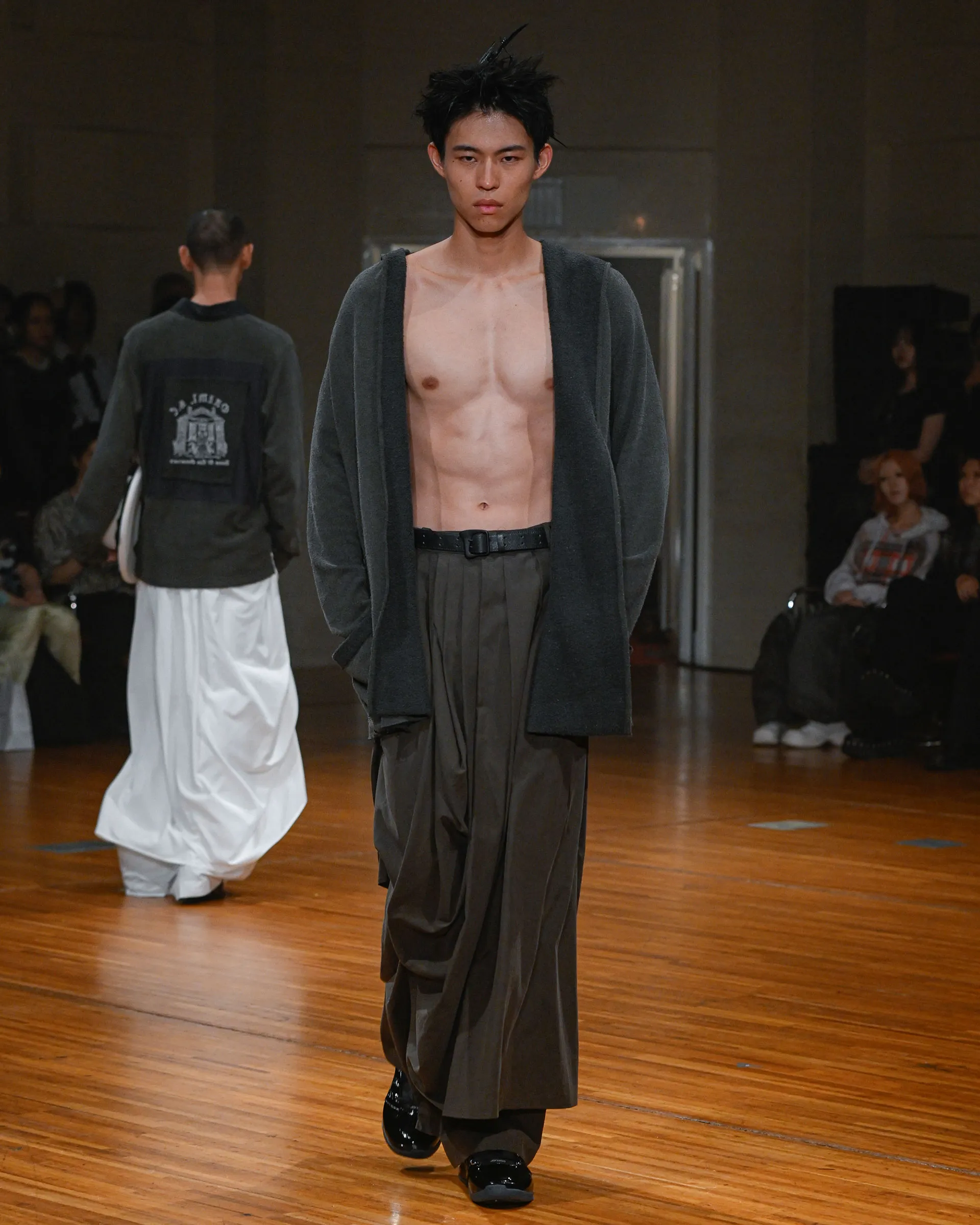
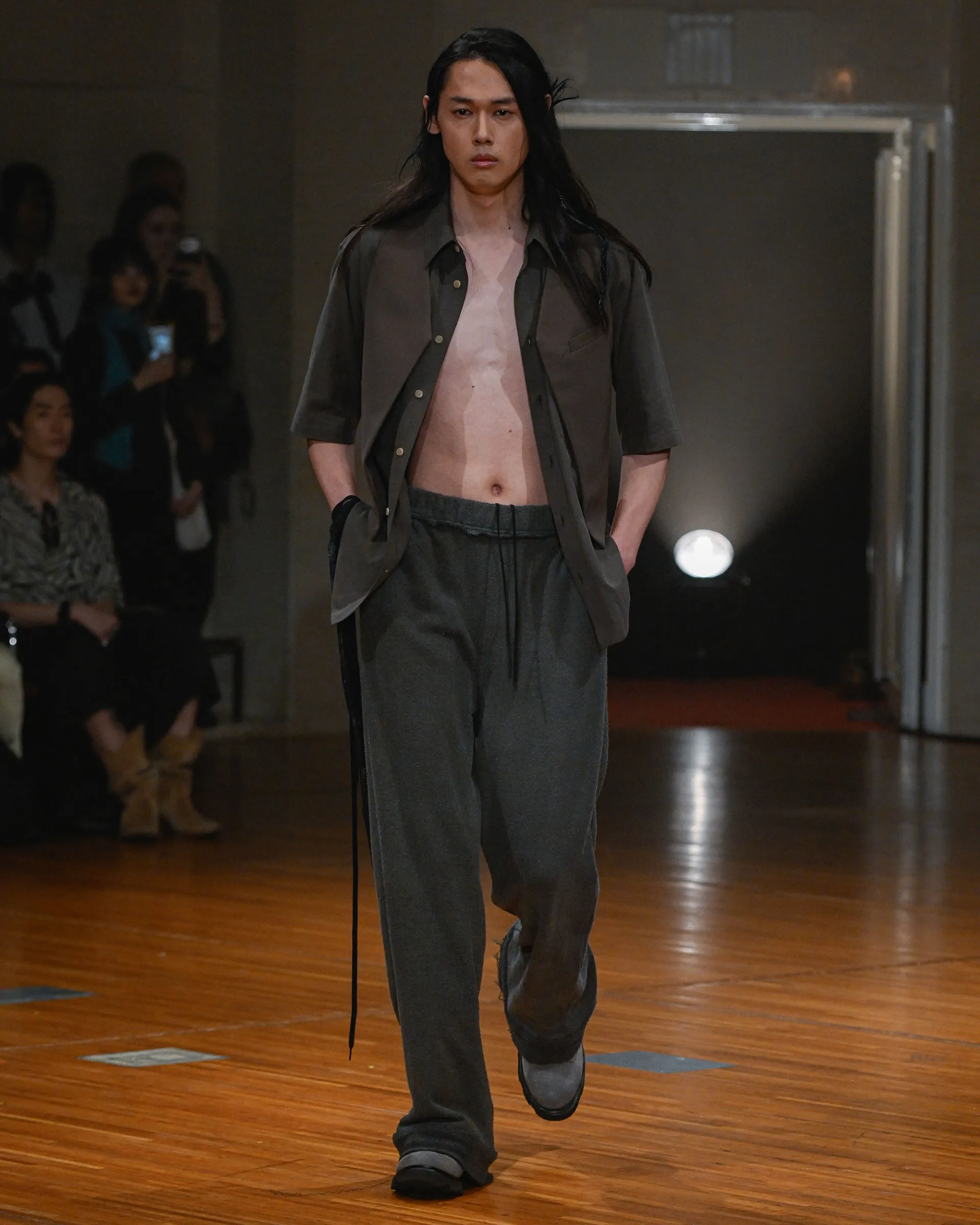
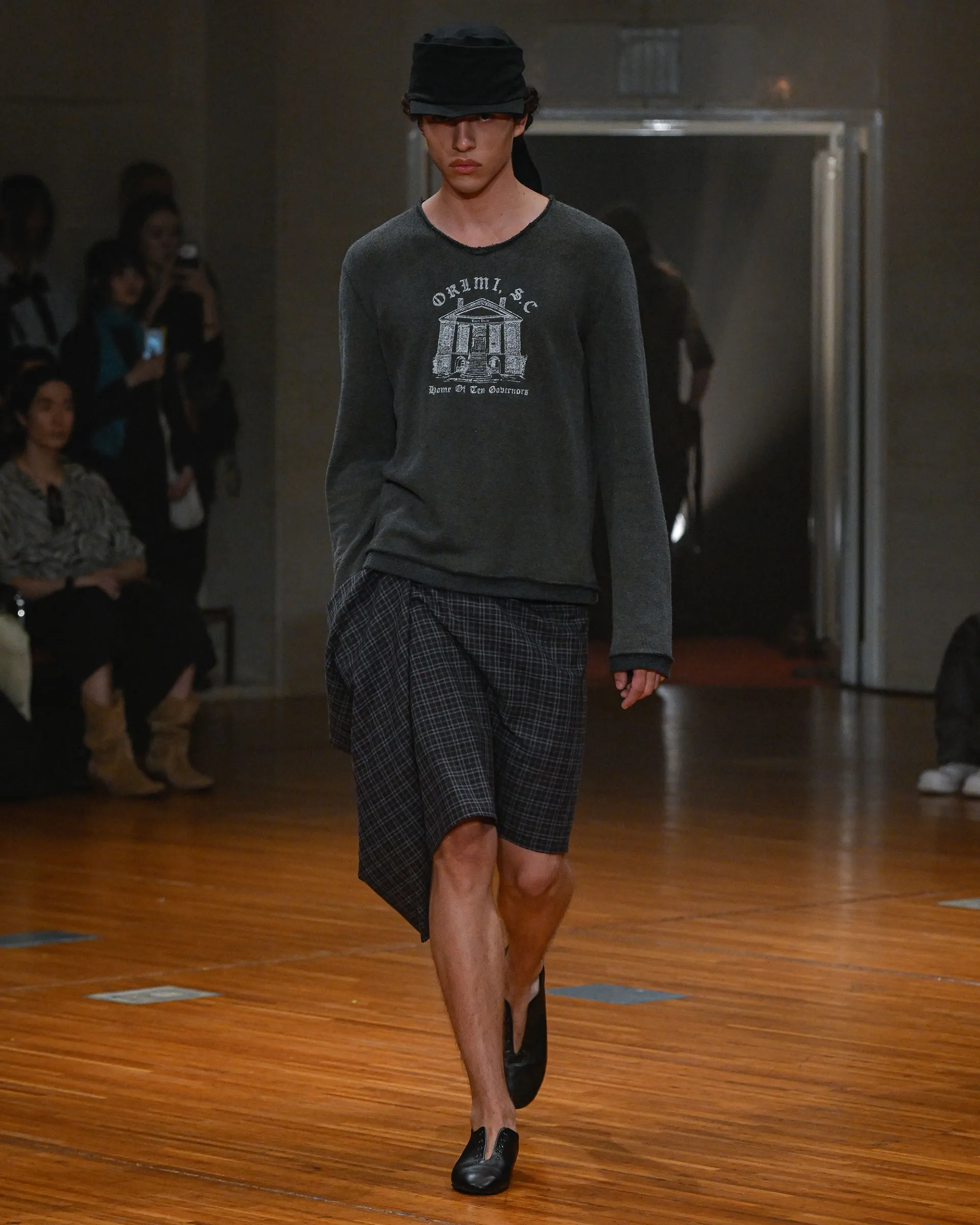
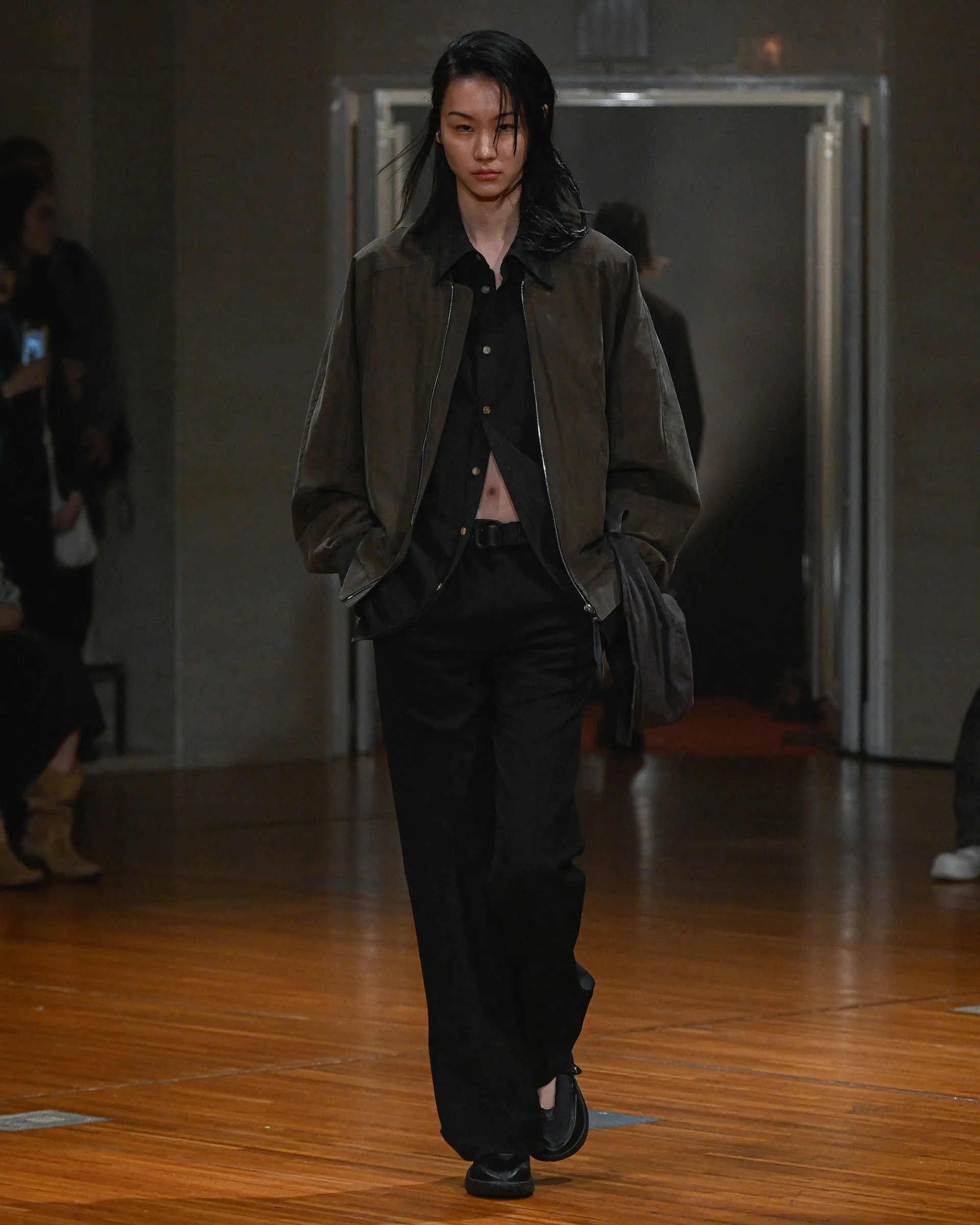
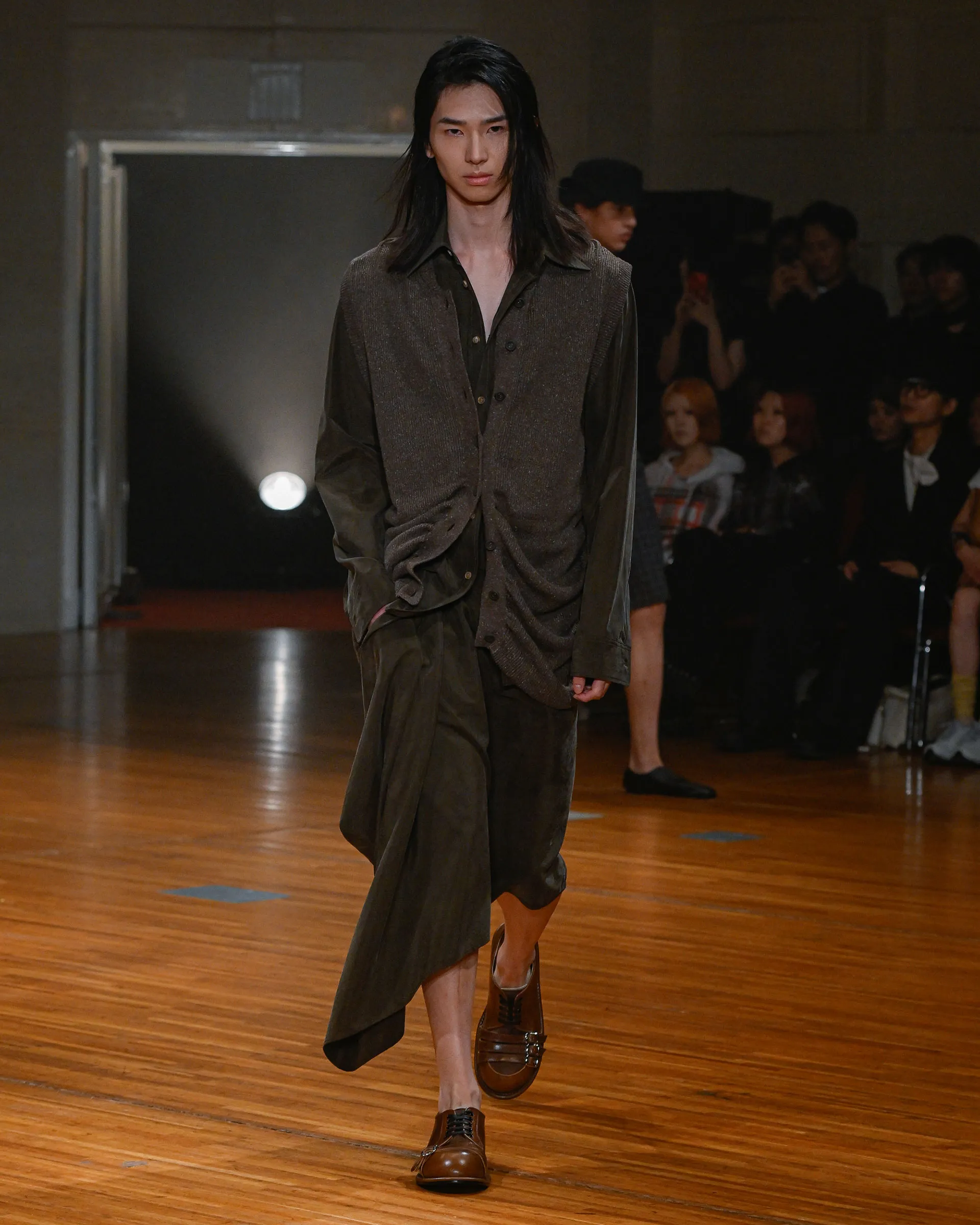
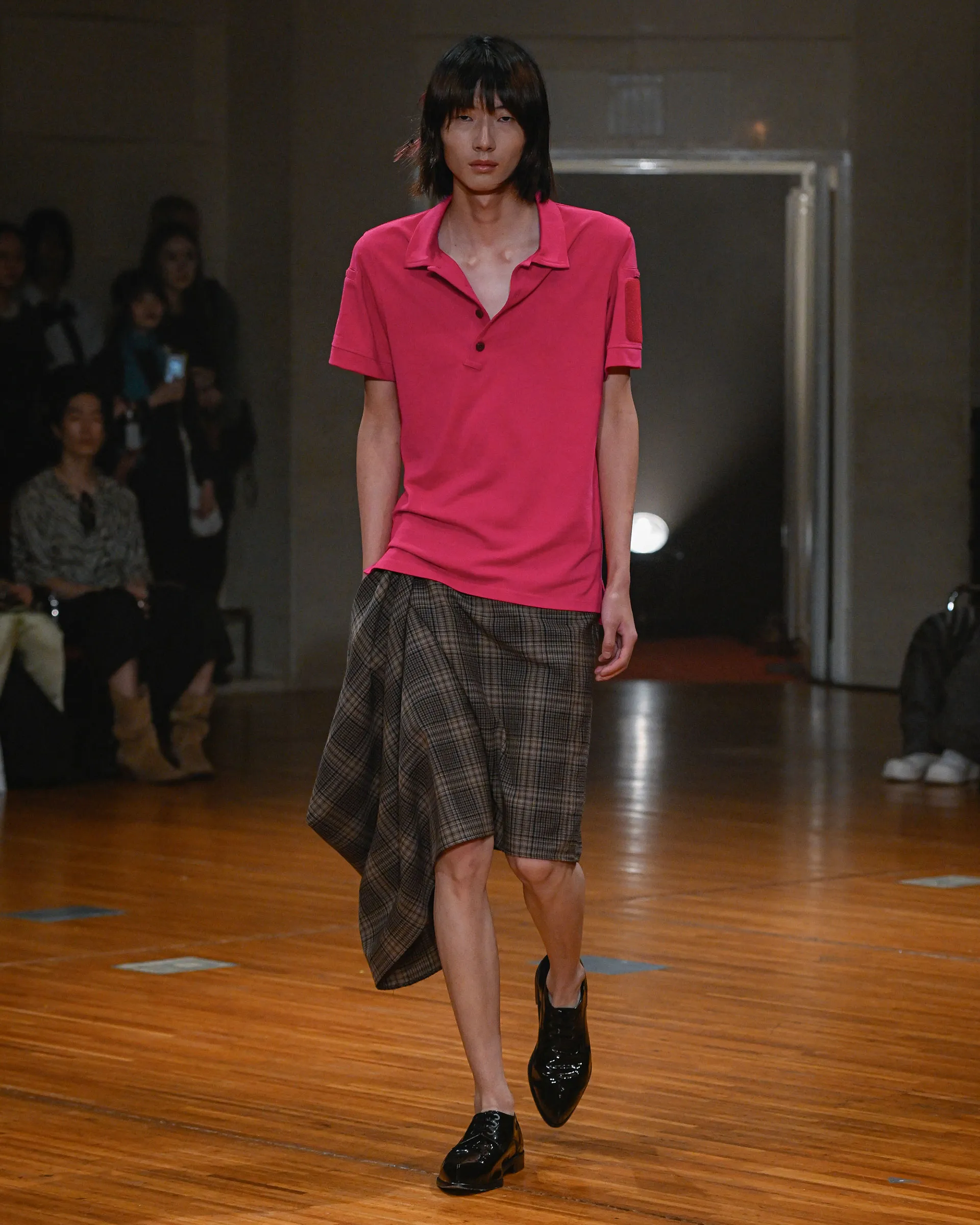
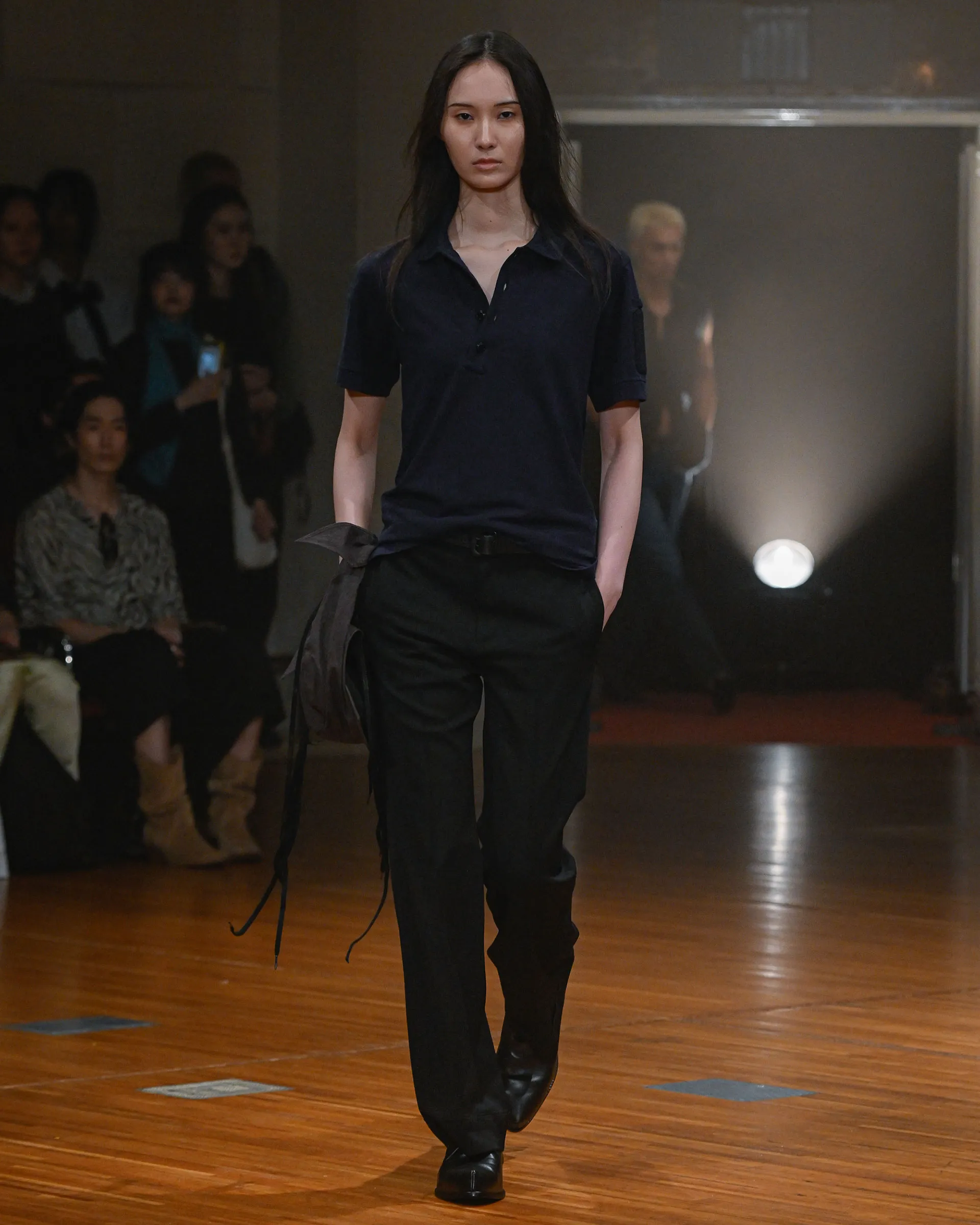
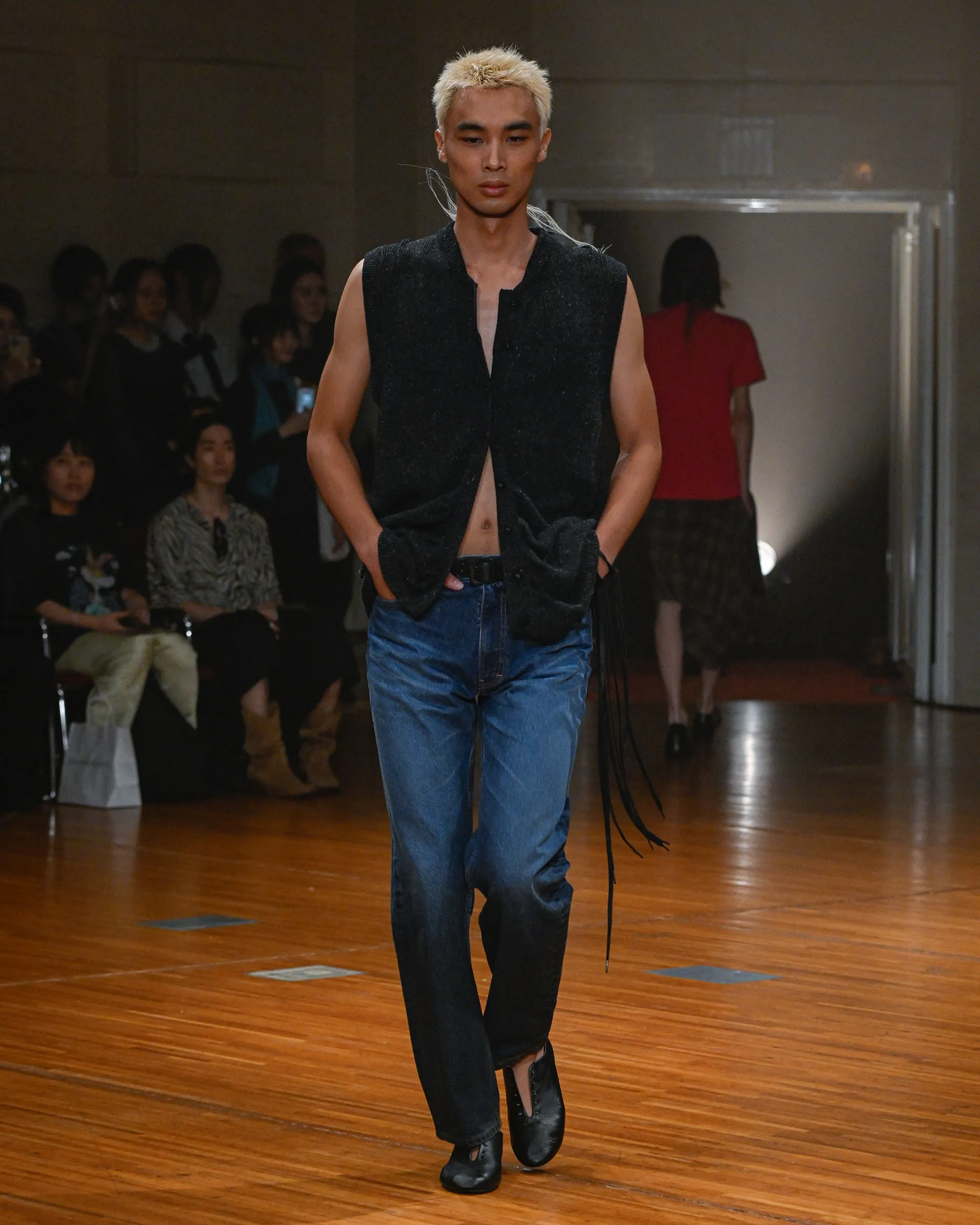
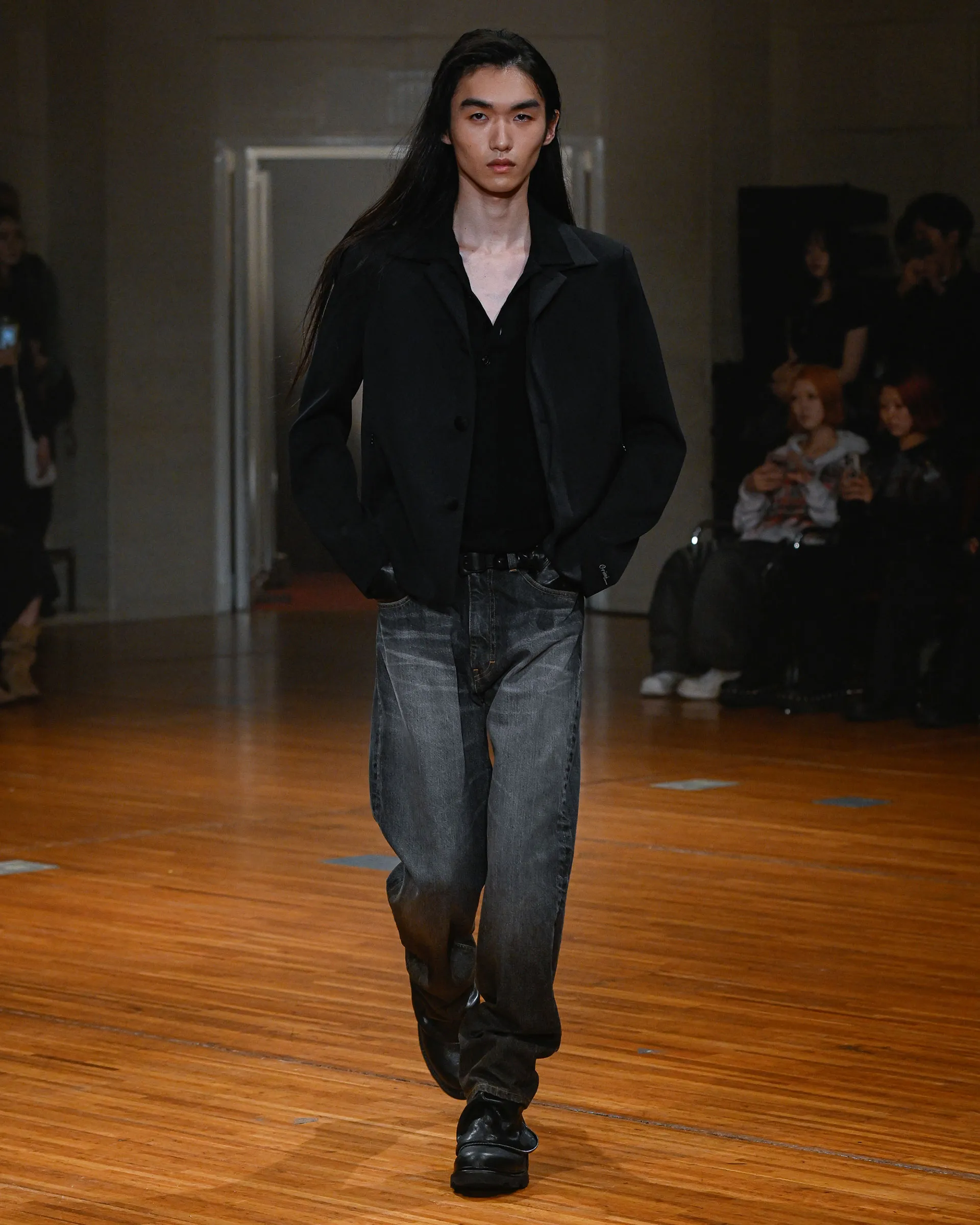
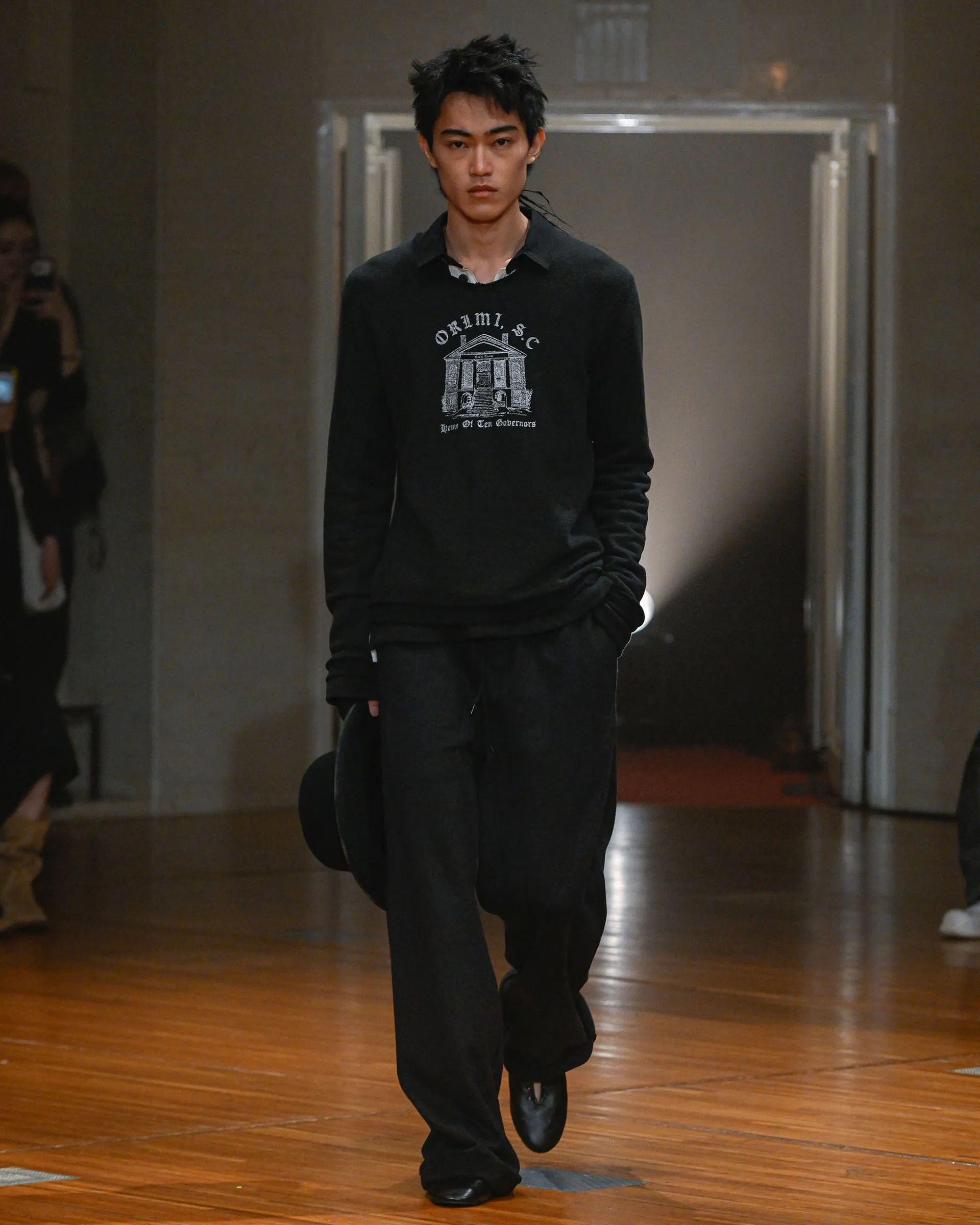
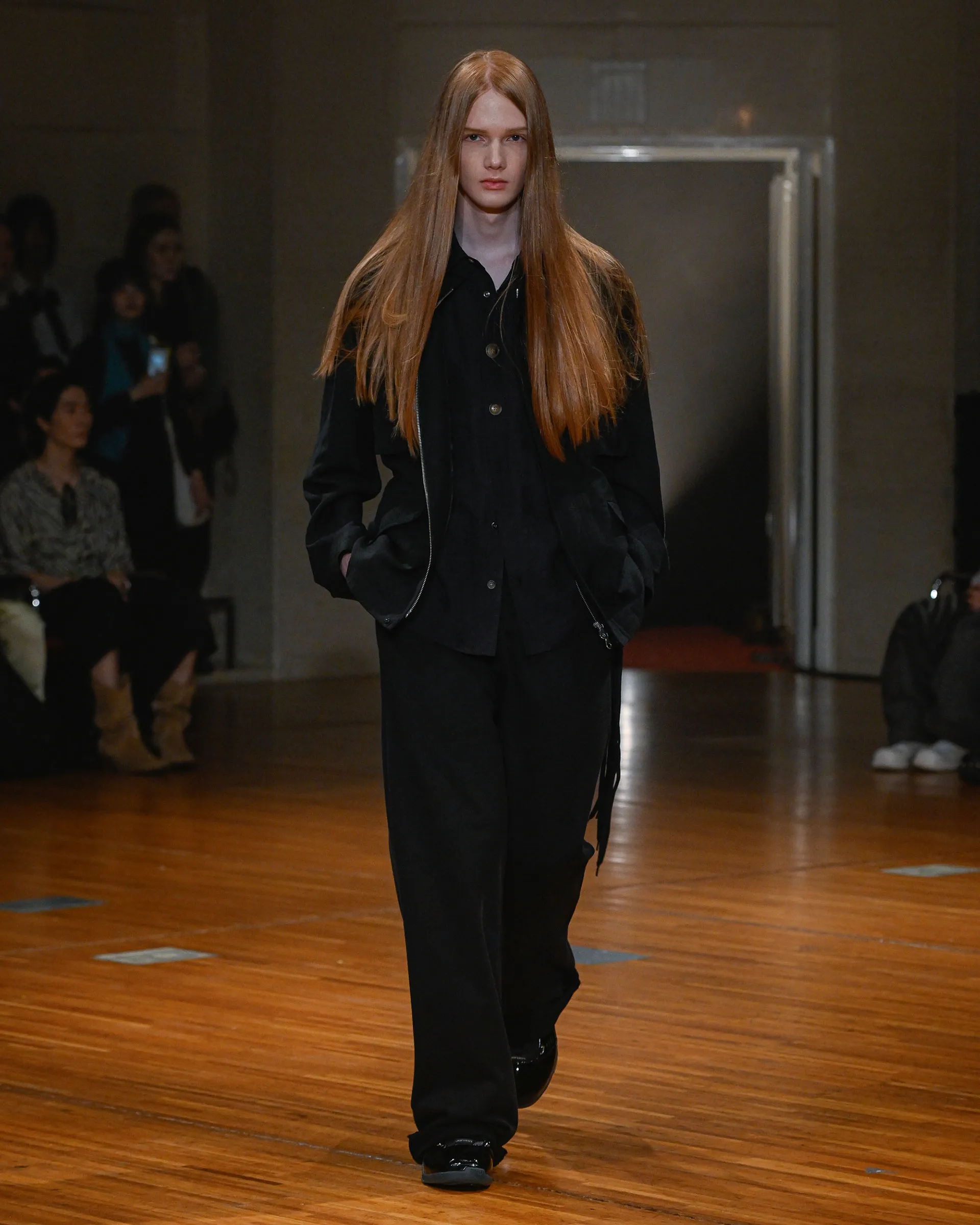
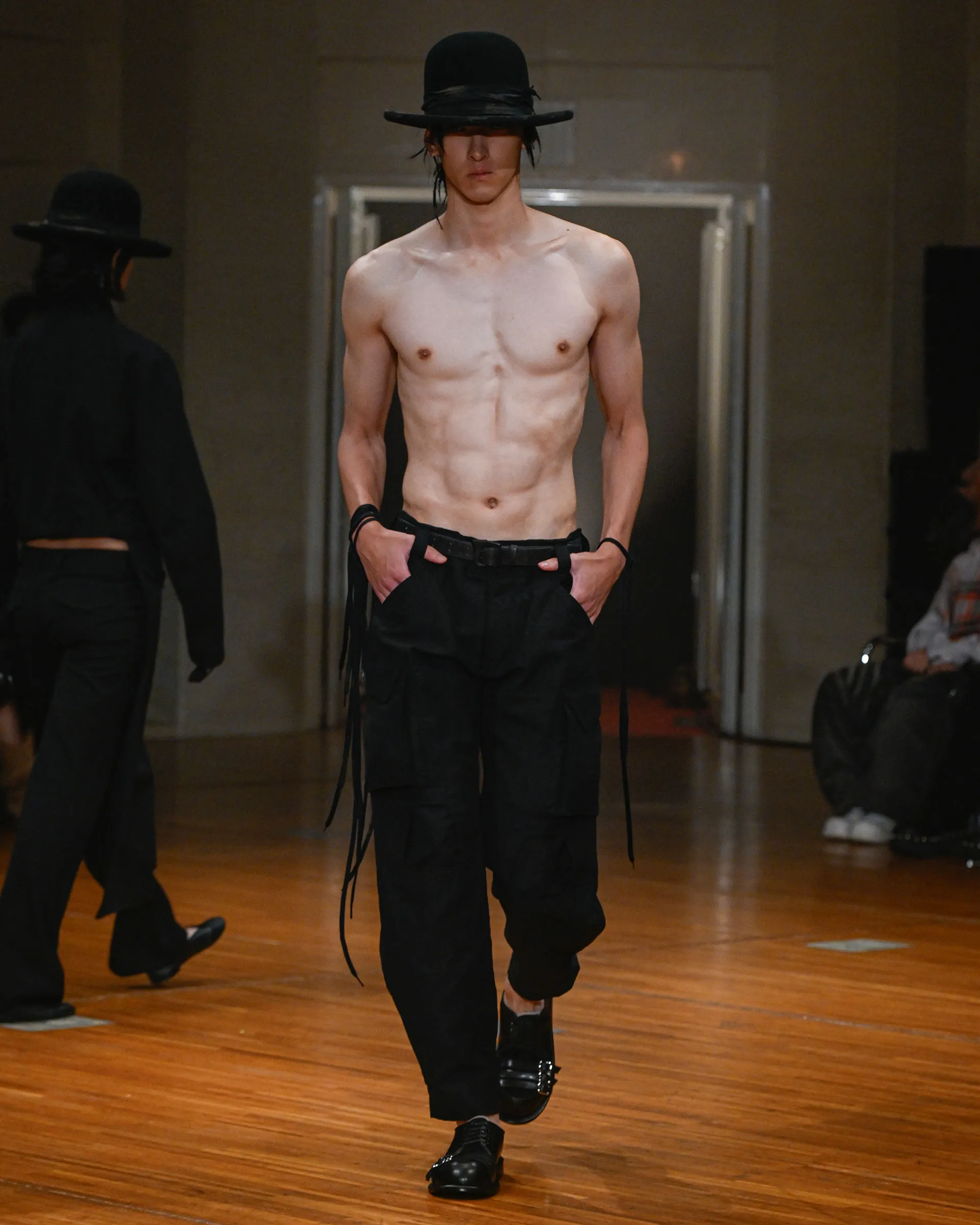
“PROPERLY DRESSED” carries an inherent duality: to dress correctly, to appear composed, and yet to preserve within that correctness a slight distortion that cannot be easily corrected by others. Imperfection emerges through absence, excess, and displacement, becoming a trace of the wearer’s own will.
At 5 a.m., as the night recedes and the city begins to resume the contours of everyday life, people adjust their disordered clothes and return to society. Yet traces of the night remain on both body and garment. To move back toward correctness without fully returning to one’s former shape; to adapt without becoming assimilated. Within this subtle dissonance, ORIMI locates a form of individual freedom for life in the contemporary city.
Knowing what is considered right, and how one is expected to behave, is no longer as difficult as it once was. From values and social conduct to appearance and dress, models for adapting to society circulate with astonishing immediacy. ORIMI’s Spring/Summer 2027 collection, “PROPERLY DRESSED,” examines the tension between conforming to increasingly legible social codes and continuing to make one’s own choices within them.
To be rendered orderly can also mean allowing one’s singular contours to become less distinct. Orimi’s attention is not directed toward a body that rejects this grammar and escapes beyond it, but toward one that understands the structure of correctness, remains within it, and still resists being fully absorbed into it. In the slight fraying that appears at the boundary between convention and individuality, the collection searches for room to remain oneself.
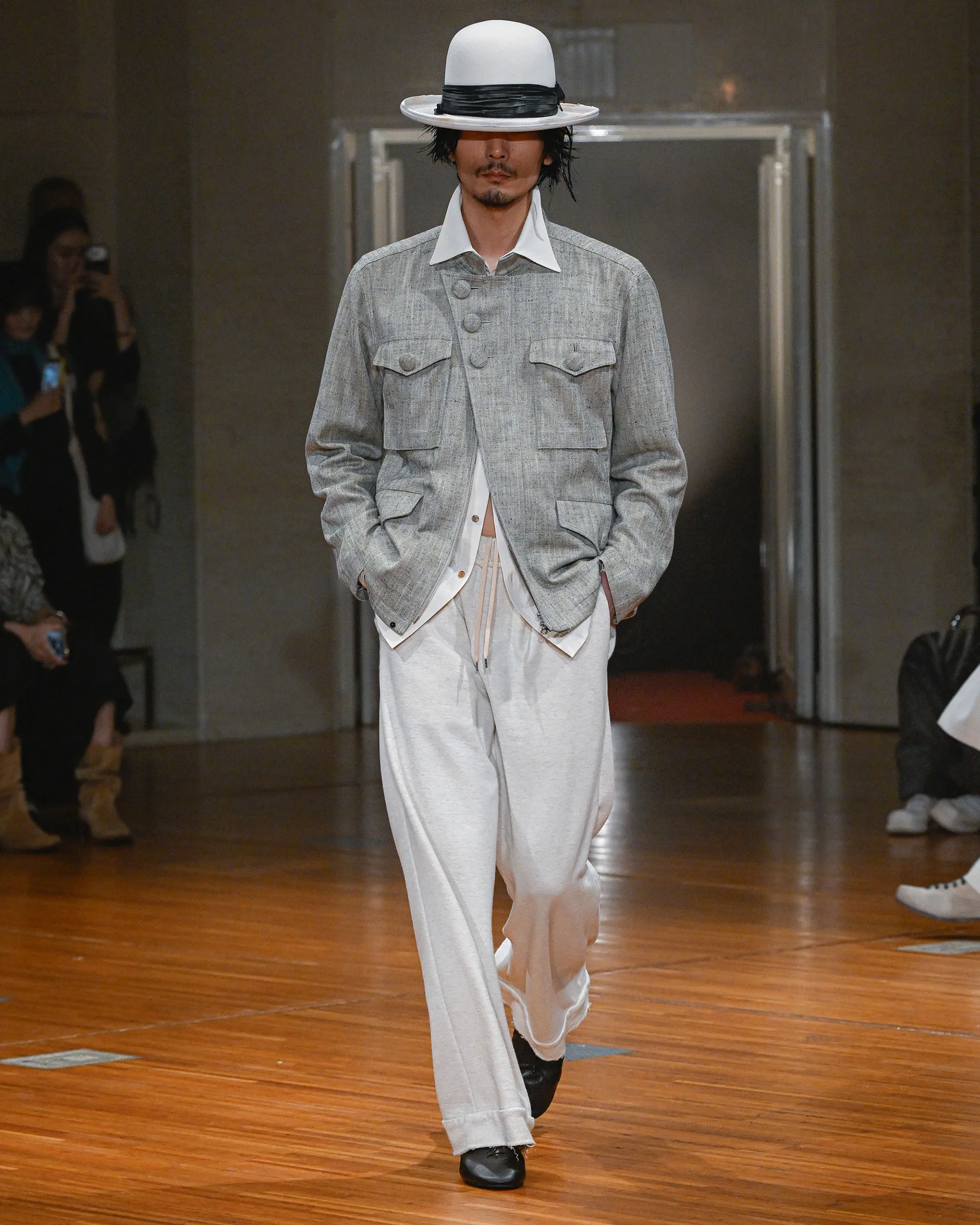
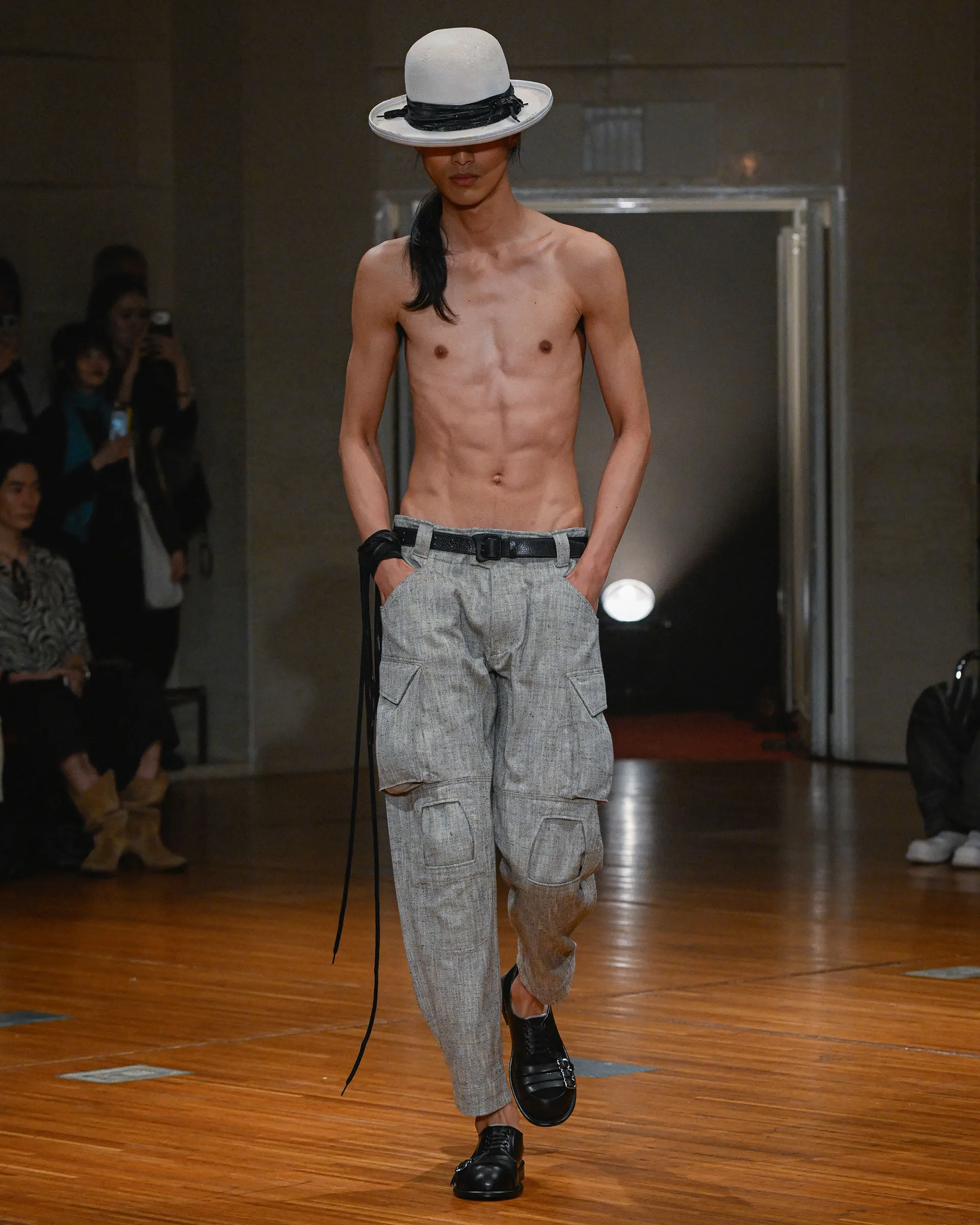
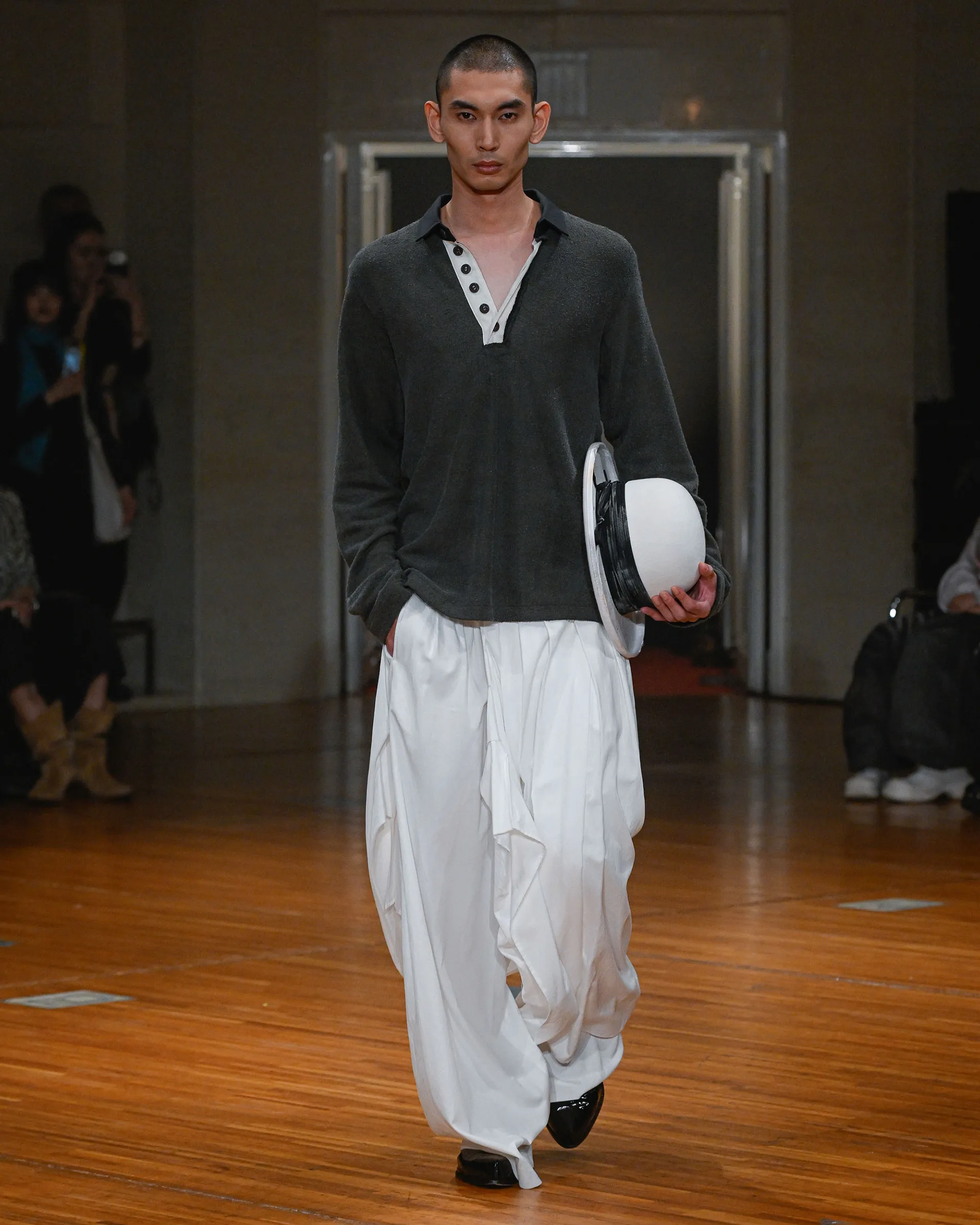
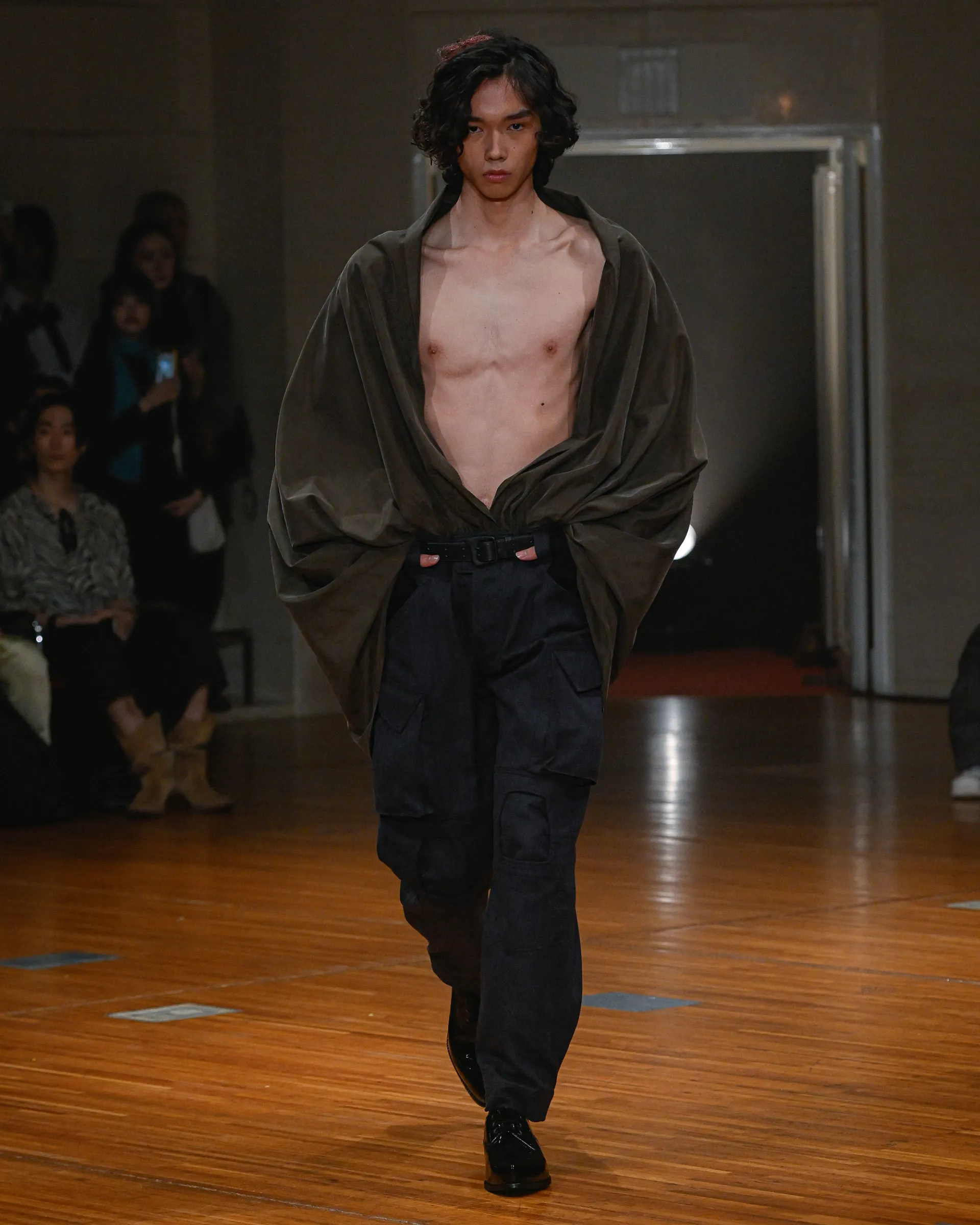
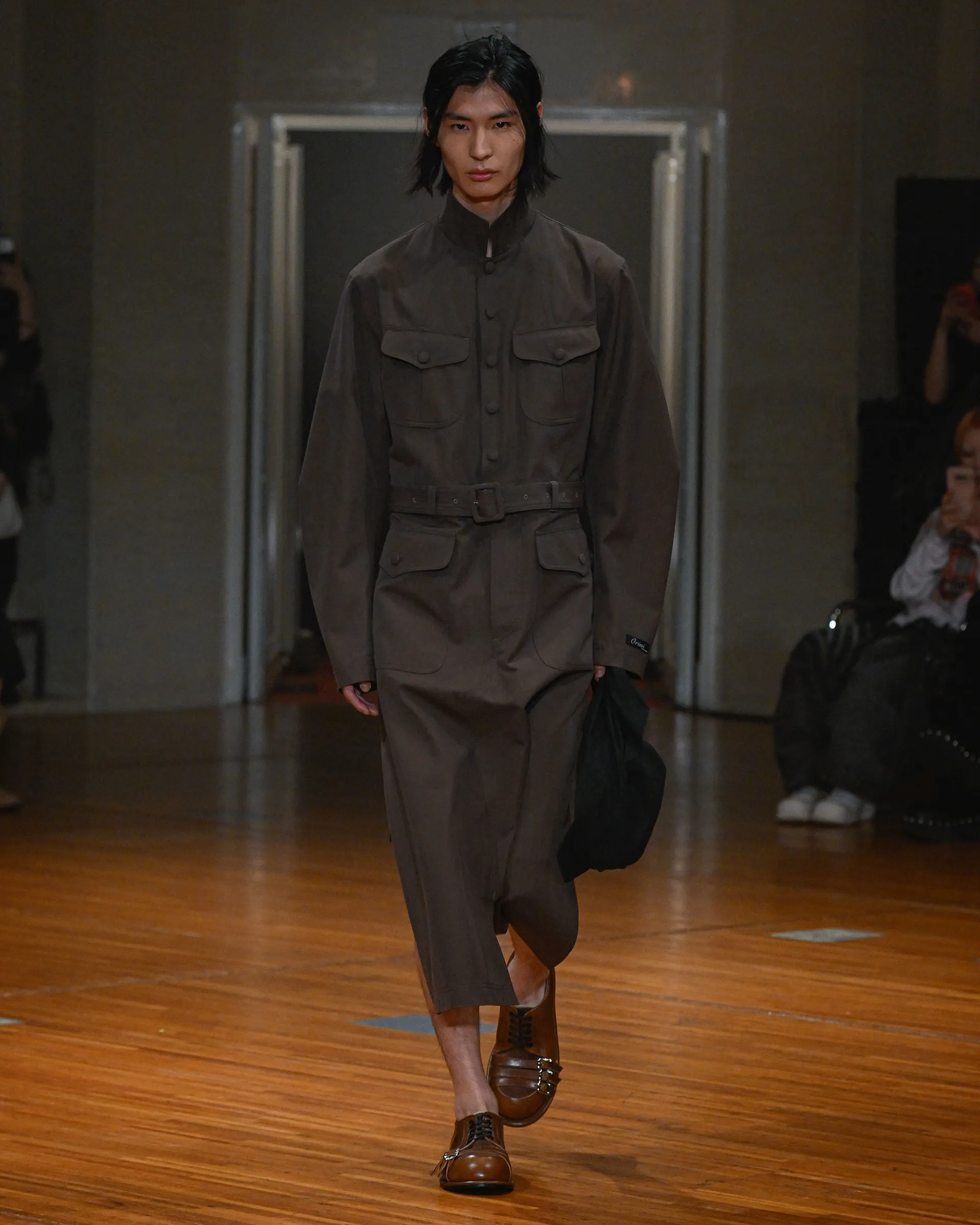
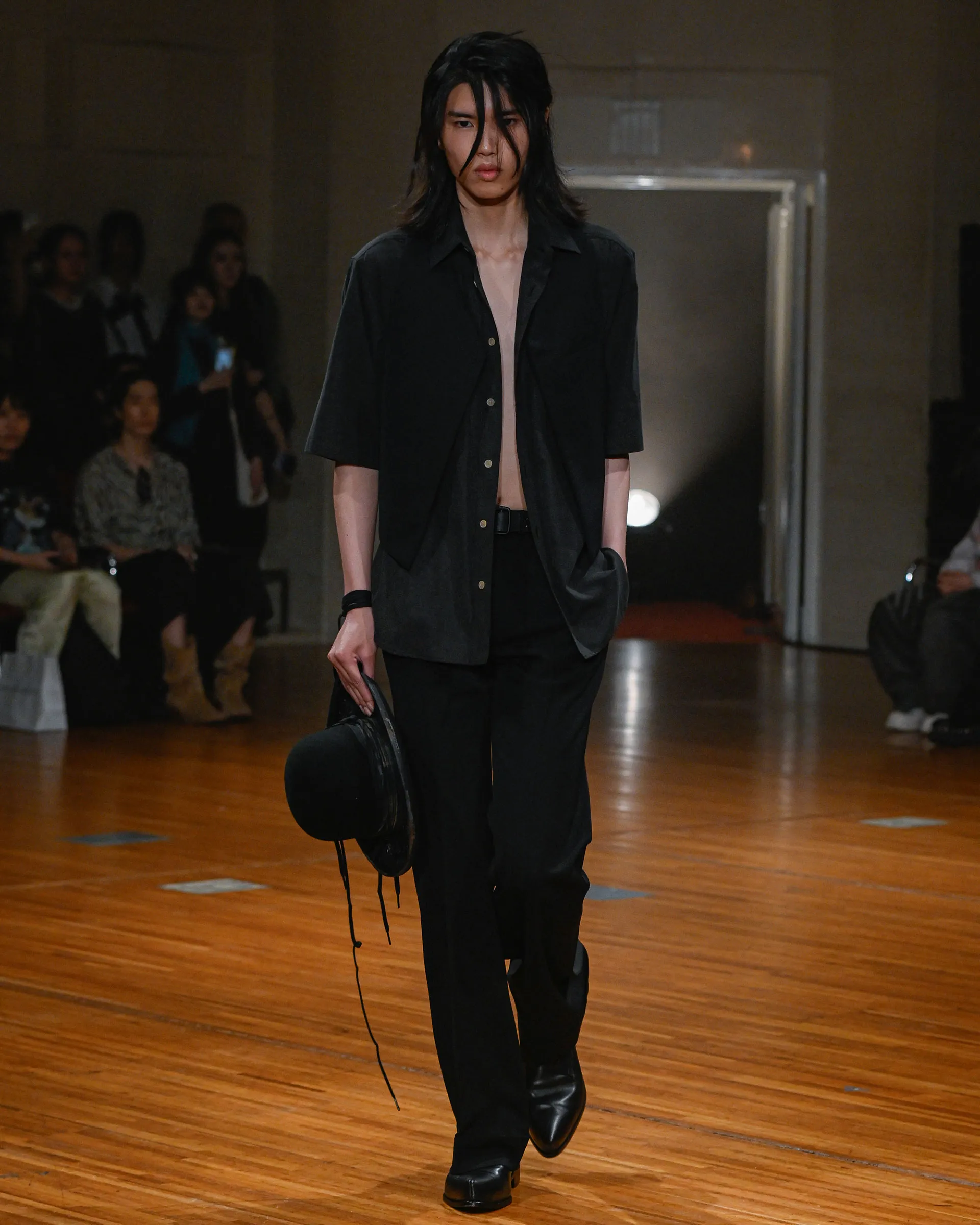
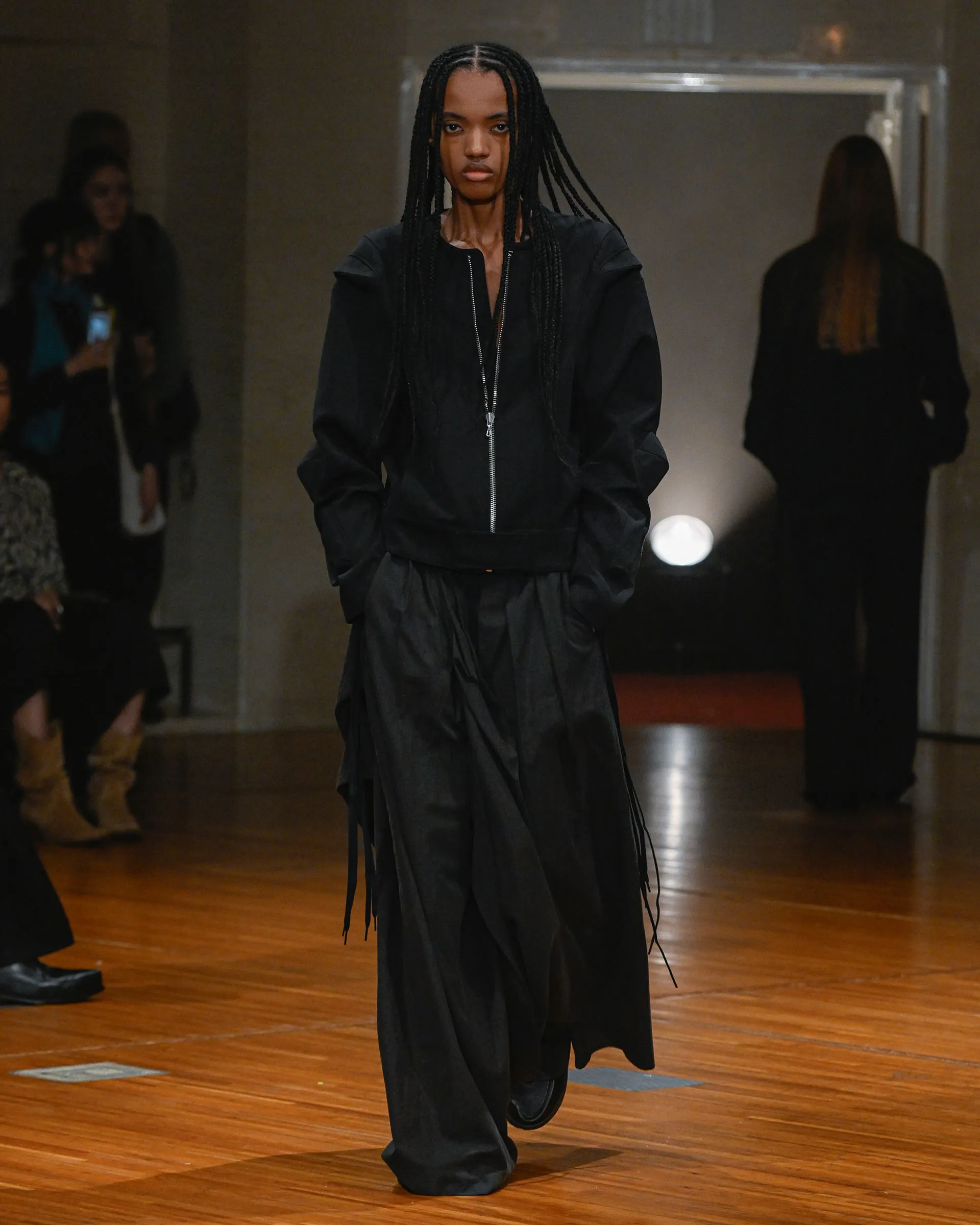
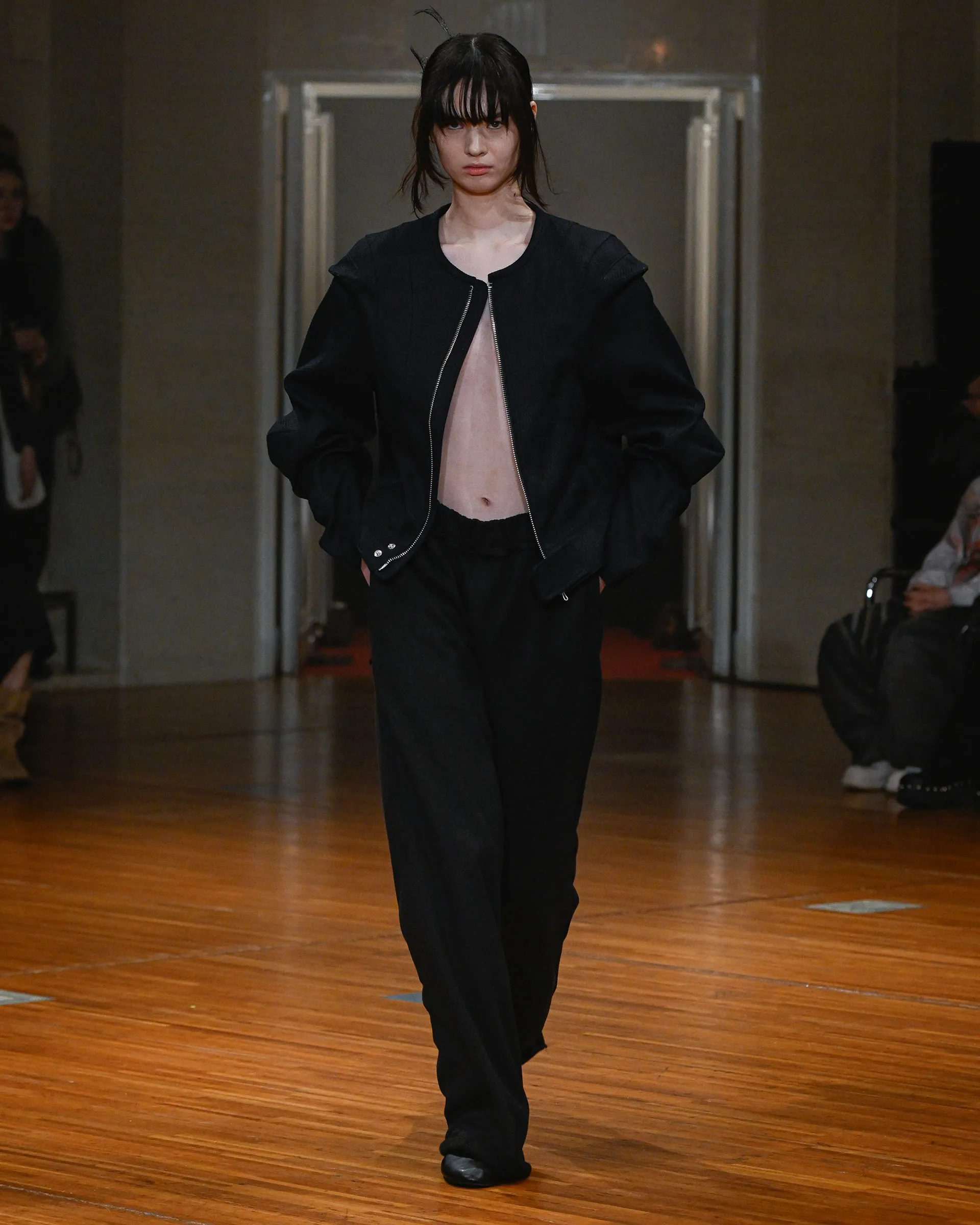
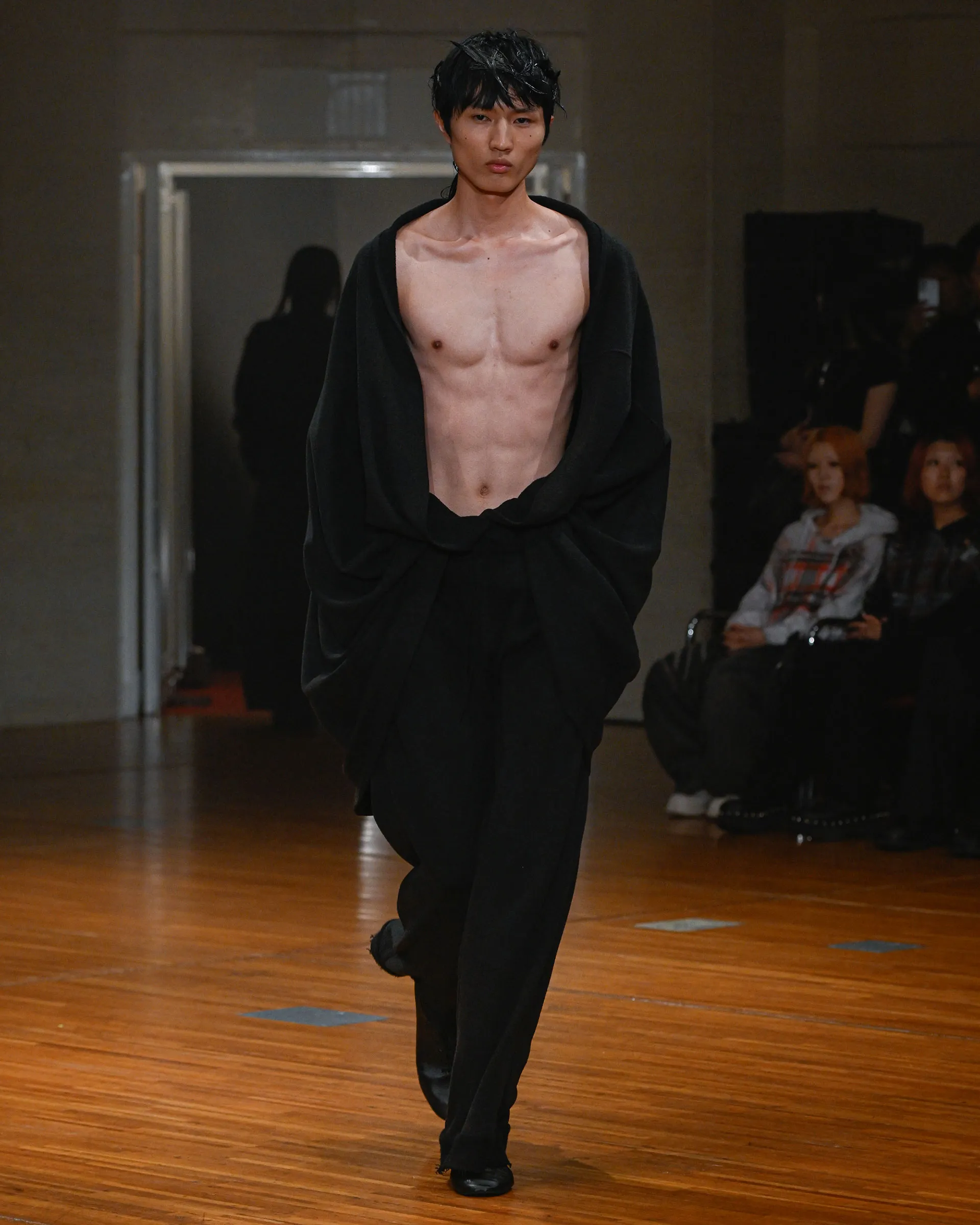
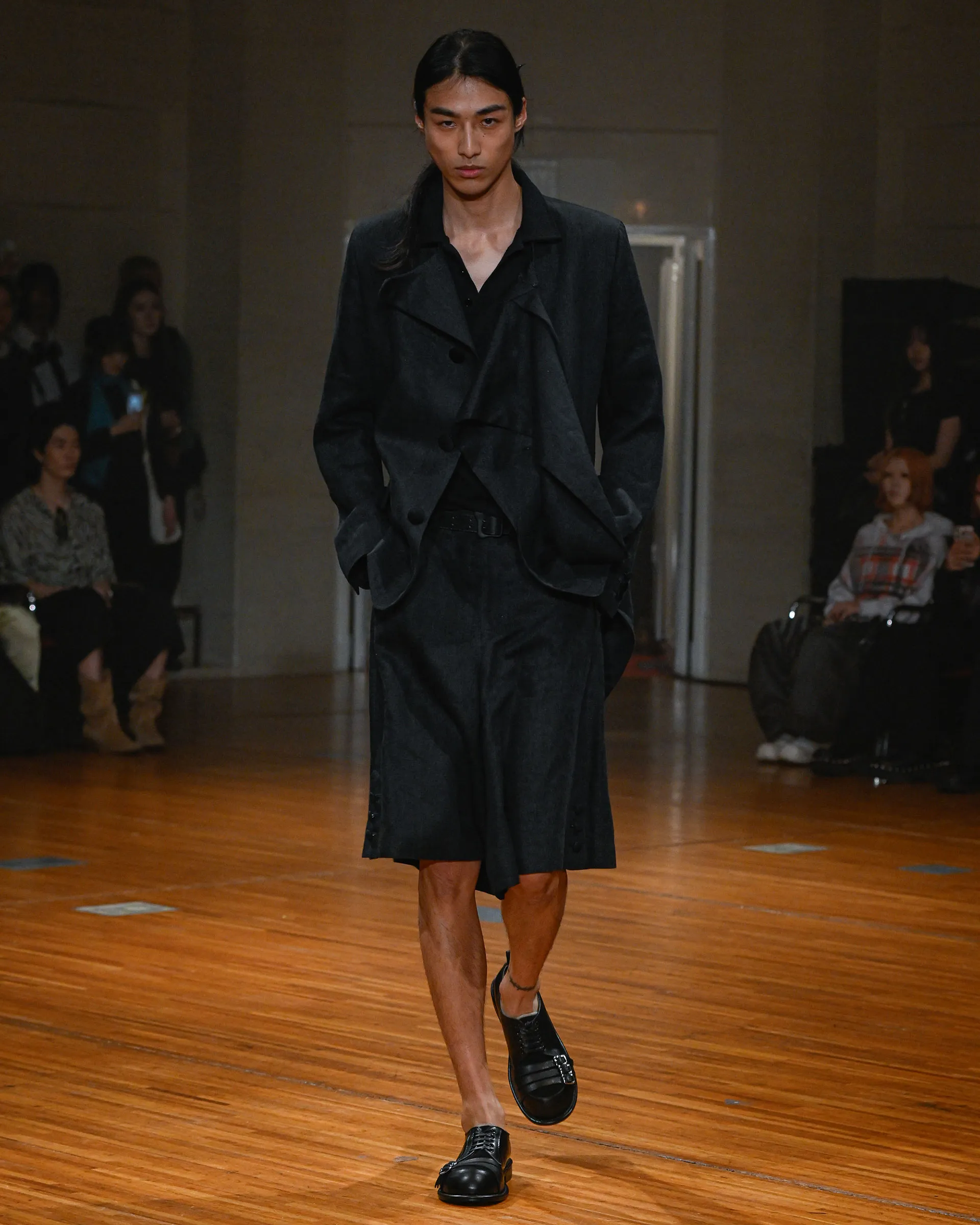
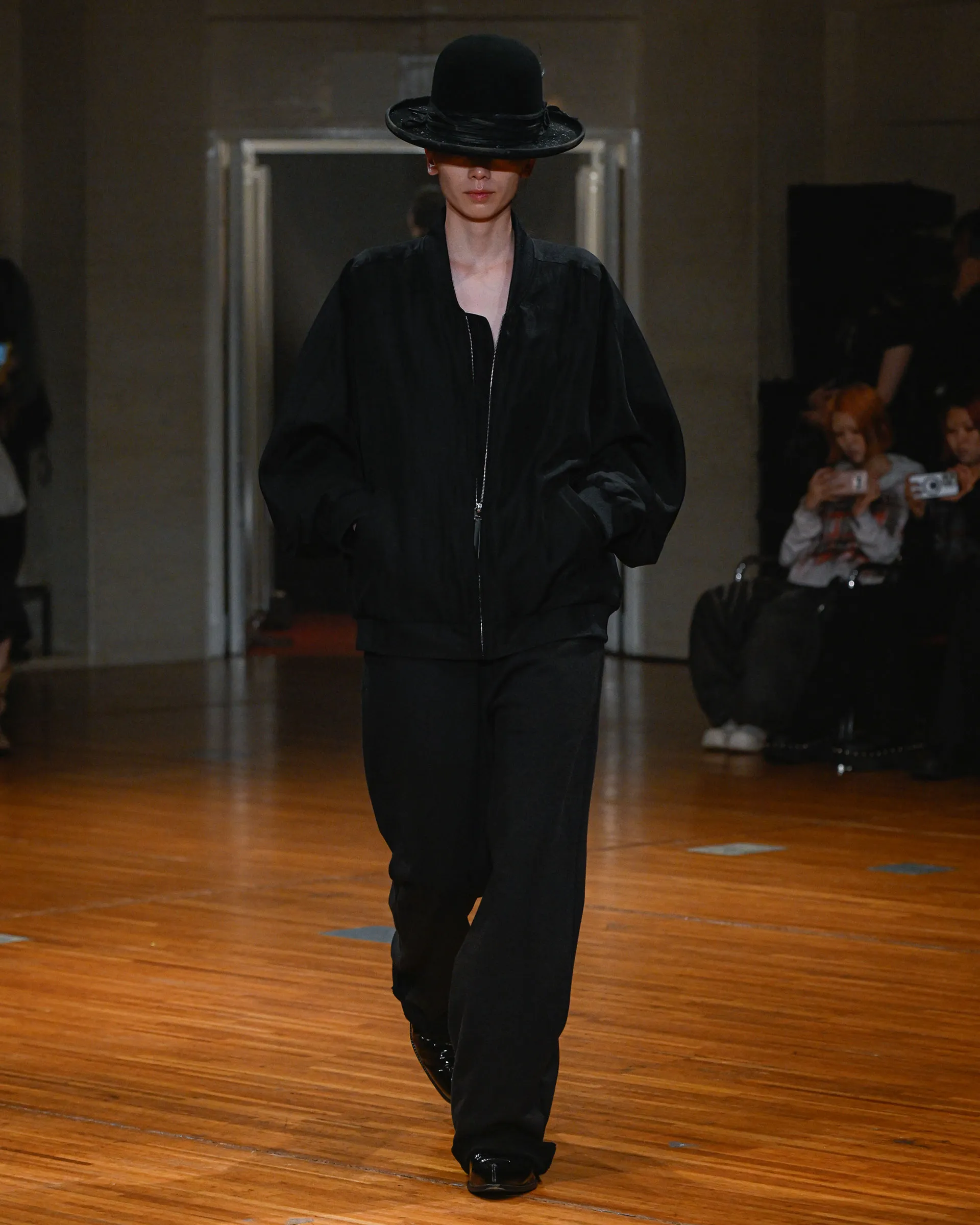
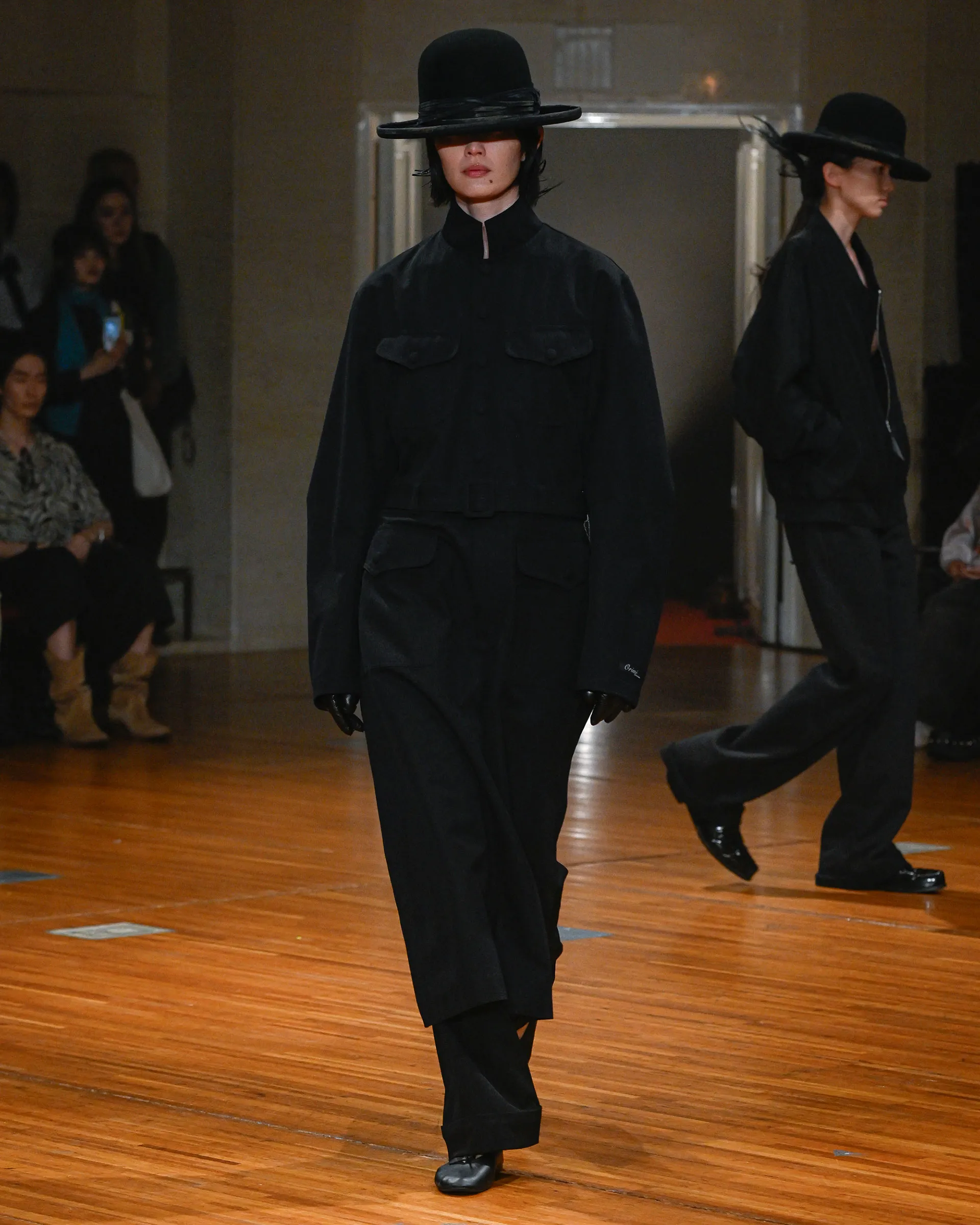
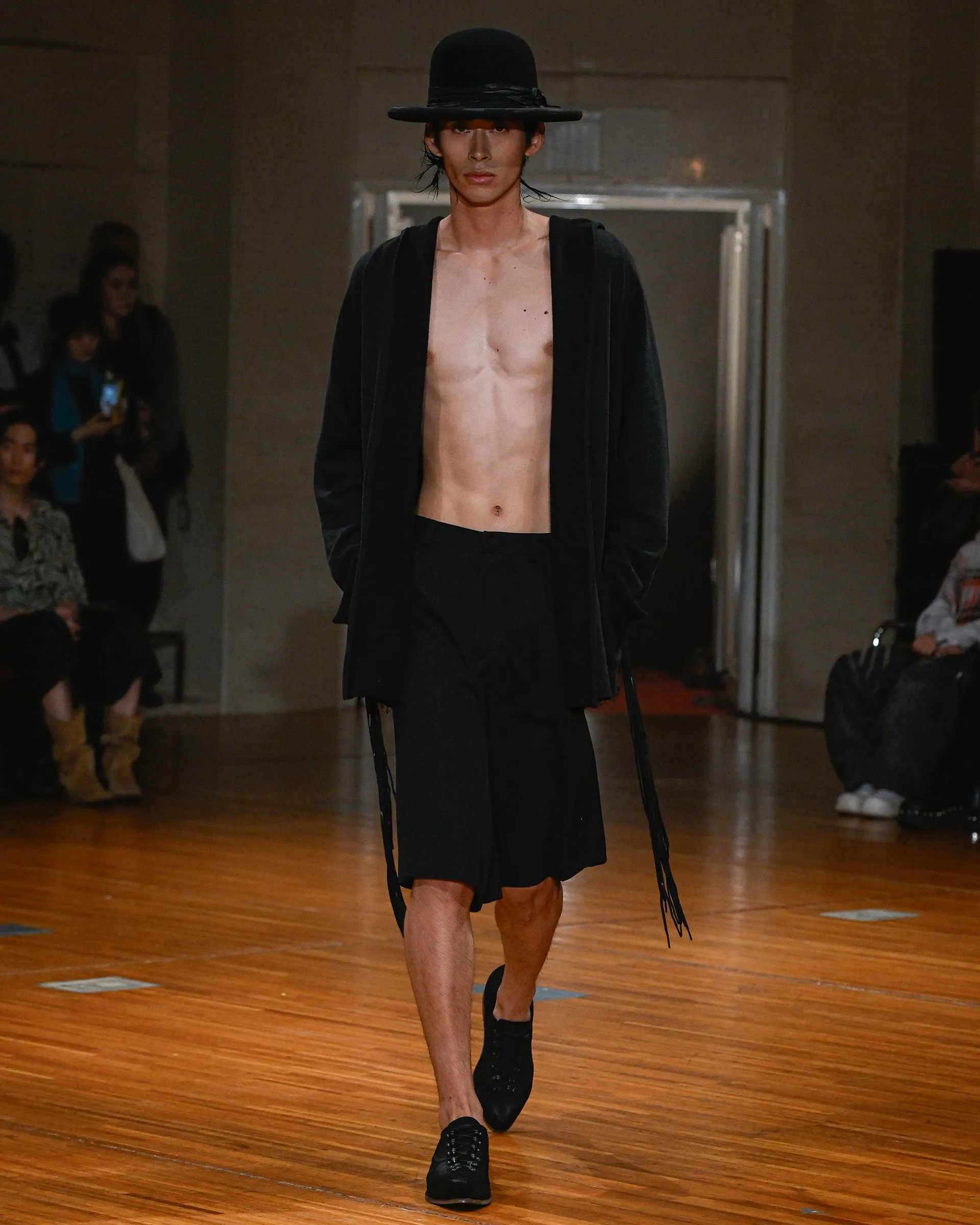
In a collaborative hat with CA4LA, the ribbon of a classic hat is replaced with a shoelace. In a utilitarian jumpsuit, half of the back panel is removed. A scarf-like panel extends directly from the body of a precisely tailored jacket, while a derby shoe developed with KIDS LOVE GAITE is layered with decorative straps. Familiar forms remain recognizable, yet are subtly altered through substitution, omission, and excess. Through these minor interventions, subtle discrepancies begin to surface within codes that otherwise appear uniform and austere.
At first glance, nothing seems disrupted. The carefully composed silhouette remains quietly aligned with the social order. Yet the longer the eye lingers, the more an unnameable dissonance begins to emerge from within that balance.
The sense of unease that Orimi has previously produced by disturbing proportion and the relationship between garment and body enters this season with a quieter expression, seeping into the social codes of everyday dress itself. Rather than announcing deviation, the clothes preserve the appearance of correctness while allowing slight fissures to remain within it. What emerges at the surface is less an act of rebellion than a restrained gesture for continually negotiating one’s distance from society.
For Orimi, freedom does not mean being unaware of what is considered correct. It means knowing the prescribed answer and still refusing to surrender one’s own judgment.